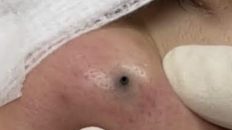
Hard pimples are some of the most stubborn breakouts. They sit deep in the skin, hurt when you touch them and can take weeks to fade.
Most pimples start the same way: oil, dead skin cells and bacteria block a pore. When that blockage forms deep under the surface, the swelling has nowhere to go and the spot turns firm and sore.
These deep spots are usually nodules or cysts. Many of them never form a white head, which is why people call them blind pimples.
Several things make them more likely: extra oil, hormone changes during puberty or around periods, family history and some medicines. Stress, friction from clothes or phones and rough scrubbing can make a breakout worse.
The good news is that most hard pimples calm down with simple care at home, as long as you are patient.
A warm compress for about ten minutes a few times a day softens the skin and can help a blind pimple come to a head. A cold pack wrapped in a cloth does the opposite job and eases swelling and pain.
Spot treatments with benzoyl peroxide, salicylic acid or sulfur help clear the pore. A gentle, soap-free cleanser and an oil-free moisturizer keep the skin from getting irritated.
Try not to squeeze a hard pimple. The pressure pushes everything deeper, adds swelling and raises the risk of infection and scars.
If a lump is very painful, keeps coming back or leaves marks, a dermatologist can help. They can drain it safely or inject a small dose of medicine that shrinks it within a day or two.
To prevent new ones, wash your face twice a day, keep hair and hands away from your face and choose products labelled non-comedogenic. The videos below show how professionals treat stubborn pimples and blackheads.